The Gut-Thyroid Connection: What Intestinal Permeability Has to Do With Autoimmune Disease
I have been reading Hashimoto’s Protocol by Dr. Izabella Wentz, a pharmacist and researcher who was diagnosed with Hashimoto’s thyroiditis at 27 after years of unexplained symptoms. Her work synthesizes years of research into one of the most important connections in integrative health: the relationship between gut health, immune function, and thyroid disease.
What I am learning is reshaping how I understand my own health and how I think about the health of my clients. And I think it is information that far more people need access to.
This post is about intestinal permeability, what it is, how it connects to autoimmune thyroid disease, and what the research tells us we can do about it.
The Three Legged Stool of Autoimmunity
Dr. Alessio Fasano is a pioneering researcher at Harvard Medical School whose work on intestinal permeability has fundamentally changed how the scientific community understands autoimmune disease. His research identified that three factors must all be present simultaneously for autoimmune disease to develop and persist. Dr. Wentz describes these as a three legged stool in her book.
The three factors are a genetic predisposition, an environmental trigger, and intestinal permeability.
Here is why this framing matters so much. Most people who are diagnosed with Hashimoto’s or another autoimmune condition are told that genetics are at play and that management is the best they can hope for. What Fasano’s research shows, and what Dr. Wentz has built an entire clinical practice around, is that genetics alone are not destiny. You cannot change your genetic predisposition. But you can address the trigger, and you can heal the gut. Remove either one of those legs, and the three legged stool collapses. The autoimmune cascade cannot sustain itself.
Dr. Wentz estimates based on her clinical practice that genetic predisposition accounts for only about 25 percent of the risk for developing Hashimoto’s. That means approximately 75 percent of the risk is modifiable through lifestyle, environment, and gut health.
That is a profoundly hopeful framing for anyone sitting with an autoimmune diagnosis.
What Intestinal Permeability Actually Is
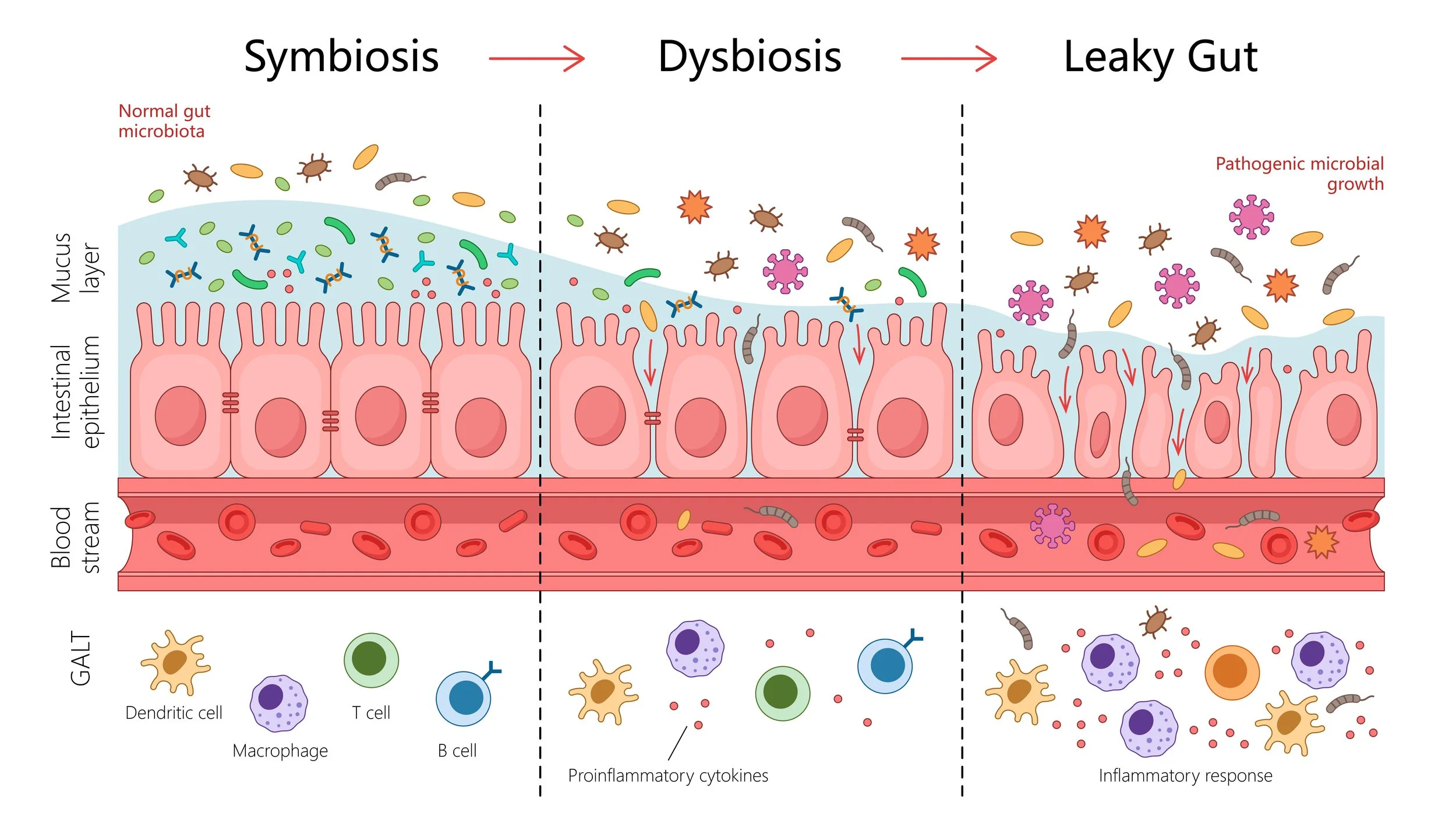
Your small intestine is lined with cells that are sealed together by what are called tight junctions. Think of these junctions as the grout between tiles. When working correctly they form a selective barrier, allowing nutrients to pass through into the bloodstream while keeping out bacteria, toxins, and undigested food particles.
When those tight junctions loosen or break down, the gut becomes permeable. Particles that should stay inside the intestinal tract begin crossing into the bloodstream. The immune system, doing exactly what it is designed to do, identifies these particles as foreign invaders and mounts a response.
The problem is that this immune response does not stay contained to the gut. It becomes systemic. Chronic low grade inflammation spreads throughout the body, and over time the immune system can begin attacking tissues that it has mistakenly associated with those foreign particles. This is one of the primary mechanisms behind autoimmune disease.
A 2021 study published in Frontiers in Immunology examined gut microbiota alterations and intestinal permeability in patients with Hashimoto’s thyroiditis and found elevated zonulin concentrations in Hashimoto’s patients, strongly suggesting a leaky gut in this population. Zonulin is a protein that regulates tight junction integrity and is the primary measurable marker of intestinal permeability. Elevated zonulin means the gut barrier is compromised.
The researchers also found significant alterations in gut microbiome composition in Hashimoto’s patients compared to controls, including higher levels of Bacteroides species and lower levels of Bifidobacterium. These microbial imbalances, known as dysbiosis, are both a driver and a consequence of increased intestinal permeability.
How This Connects to Thyroid and Immune Dysfunction
The thyroid-gut axis is bidirectional, meaning dysfunction in one system directly affects the other. Here is how the cascade works.
Dysbiosis in the gut creates an environment where harmful bacteria and their byproducts gain access to the gut wall. This damages the tight junctions and increases permeability. Once the barrier is compromised, immune cells in the gut lining are exposed to particles they would not normally encounter. The immune system activates.
In people with a genetic predisposition to autoimmune thyroid disease, this immune activation can set off molecular mimicry, the process where the immune system confuses thyroid tissue proteins with foreign particles it has been primed to attack. Research suggests there is structural similarity between components of gliadin found in gluten and thyroid proteins including thyroglobulin, which explains in part why gluten is such a significant trigger for Hashimoto’s specifically.
Beyond the immune attack itself, a compromised gut directly impairs the body’s ability to absorb the nutrients essential for thyroid function. The gut microbiota plays a critical role in the absorption of iodine, selenium, zinc, and iron, all of which are required for thyroid hormone synthesis and conversion. A study published in Frontiers in Immunology found that gut dysbiosis in Hashimoto’s patients directly affects the absorption of these key micronutrients. You can supplement selenium and still be functionally deficient if your gut cannot absorb it properly.
Studies conducted in Turkey and Brazil found elevated serum zonulin levels in Hashimoto’s patients that correlated with decreased levels of free triiodothyronine, or T3, which is the active form of thyroid hormone. Lower T3 means more fatigue, more cognitive fog, more weight resistance, and more of everything that makes Hashimoto’s so difficult to live with.
What Triggers Intestinal Permeability
Understanding what breaks down the gut barrier is essential for knowing what to address. The most common drivers include:
Reactive foods, particularly gluten, which directly triggers zonulin release and has been shown to increase gut permeability even in people without celiac disease. Food sensitivities more broadly can generate immune responses that damage the gut lining over time.
Chronic stress, which elevates cortisol and directly affects gut lining integrity and immune regulation. The gut-brain axis is real and stress is one of the most underappreciated drivers of gut dysfunction.
Intestinal infections including H. pylori, Blastocystis hominis, small intestinal bacterial overgrowth known as SIBO, Candida overgrowth, and other pathogens that disrupt microbial balance and damage the gut wall.
Non-steroidal anti-inflammatory medications like ibuprofen, which are well documented to increase intestinal permeability.
Alcohol in regular or significant quantities.
Nutrient deficiencies, particularly zinc and vitamin D, which are required for tight junction maintenance and immune regulation.
Poor sleep and sedentary lifestyle, both of which negatively affect microbiome diversity and gut barrier integrity.
Why This Matters Personally
Reading Hashimoto’s Protocol has been one of those experiences where you start connecting dots that have been scattered across years of symptoms, lab results, and confusing health conversations.
I have been navigating elevated thyroid antibodies and working with my functional medicine provider on a protocol that includes targeted supplementation, gluten removal, and lifestyle changes. What I am learning through this book is the deeper why behind every piece of that protocol. The selenium and myo-inositol combination I take is not just about thyroid support. It is about immune modulation. The gluten removal is not just about reducing inflammatory foods. It is about removing a trigger that is actively driving my immune system to attack my own thyroid tissue through molecular mimicry. The gut healing work is not optional or supplementary. It is foundational.
Dr. Wentz writes that healing a leaky gut can be a complete game changer in putting Hashimoto’s into remission and resolving many of the associated symptoms. And there is a meaningful body of research suggesting that in some people, removing triggers and healing the gut is enough to normalize thyroid antibodies completely.
That is not a guarantee. But it is a real possibility that most people with Hashimoto’s are never told about.
What You Can Do to Heal Intestinal Permeability
This is the part I find most empowering because the gut is remarkably capable of healing when given the right conditions.
Remove the triggers first. Gluten is the highest priority for anyone with autoimmune thyroid disease. A strict 60 to 90 day elimination gives your immune system a chance to calm down and your gut lining a chance to begin repairing. Other common reactive foods worth exploring include dairy, corn, soy, and eggs depending on individual sensitivities.
Support gut lining repair with targeted nutrients. L-glutamine is the most well researched amino acid for healing intestinal permeability. It is the primary fuel source for the cells lining your small intestine and has been shown to reduce leaky gut in multiple studies. Zinc carnosine supports tight junction integrity. Bone broth contains collagen and gelatin that help seal the gut lining. Slippery elm, aloe vera, and marshmallow root are mucilaginous herbs that soothe and protect the gut wall.
Restore microbial balance through probiotic supplementation, prebiotic foods like garlic, onions, asparagus, and leeks, and by reducing dietary sugar and processed foods that feed harmful bacteria.
Address stress as a clinical priority. Chronic cortisol elevation directly damages gut integrity. Yoga, breathwork, adequate sleep, and nervous system regulation are not optional lifestyle additions for someone with autoimmune thyroid disease. They are part of the treatment protocol.
Test rather than guess. A comprehensive stool test like the GI-MAP from Diagnostic Solutions or zonulin testing through a functional medicine provider can tell you specifically what is happening in your gut so you can address it precisely rather than broadly.
A Note on Remission
Dr. Wentz is careful to use the word remission rather than cure, and I think that distinction is important and honest. You cannot change your genetic predisposition. If gluten is your trigger, going gluten free may normalize your antibodies, but eating gluten again could restart the cascade. Remission requires ongoing commitment to the conditions that allowed healing in the first place.
That said, remission is real. People achieve it. Thyroid antibodies normalize. Symptoms resolve. Thyroid function improves. And the research gives us clear mechanistic reasons why that is possible when you address all three legs of the stool simultaneously.
This is the work I am doing for myself right now. And it is the framework I bring to my health coaching practice for clients navigating thyroid dysfunction, autoimmune conditions, and the kind of persistent, hard-to-explain symptoms that often have their roots in a gut that has been quietly struggling for years.
Tips and Action Steps
If you suspect intestinal permeability is affecting your health: Consider getting zonulin tested through a functional medicine provider. Remove the most common gut irritants for at least 30 days, with gluten as the highest priority. Add gut healing nutrients including L-glutamine 5 grams daily, zinc carnosine, bone broth daily if you can tolerate it, and a quality probiotic with multiple strains. Address stress directly since cortisol is one of the most significant drivers of gut permeability. Work with a functional medicine provider or integrative health coach to identify your specific triggers.
If you have Hashimoto’s or autoimmune thyroid disease: Read Hashimoto’s Protocol by Dr. Izabella Wentz. Get a complete thyroid panel including TPO antibodies and thyroglobulin antibodies, not just TSH. Ask your provider about zonulin testing alongside your thyroid panel. Give gut healing protocols at least 60 to 90 days before evaluating results.
Nicole Torgersen is an integrative nutrition and health coach and RYT 200 yoga instructor based in the San Francisco Bay Area. She works with clients one on one, in group coaching programs, and with companies interested in supporting their employees with health and wellness programs. Learn more at nicoletorgersen.com. Nothing in this post constitutes medical advice. Always work with your healthcare provider before making significant dietary or lifestyle changes, especially if you are managing a diagnosed health condition.